

Getting blood test results can be a stressful experience, particularly when you notice that there is something wrong with the result such as a high RDW. When your RDW (Red Cell Distribution Width) was high, you may be wondering what it means to your health. RDW is a reading in your blood test, which shows the difference in the size of your red blood cells. Basically, a high RDW indicates that the red blood cells you have are of different sizes which might be a sign of a health problem.
- This is the bare, bare truth of the matter, you have a high RDW result, but it is not a diagnosis. Consider it a red flag, a hint that something in your blood is not exactly perfect, and requires further research.
- By the conclusion of this paper, you will know what RDW is, why it could be high, what your doctor could do and how you could take care of your health in the future.
What Is RDW, and Why Is It Even on Your Blood Test?
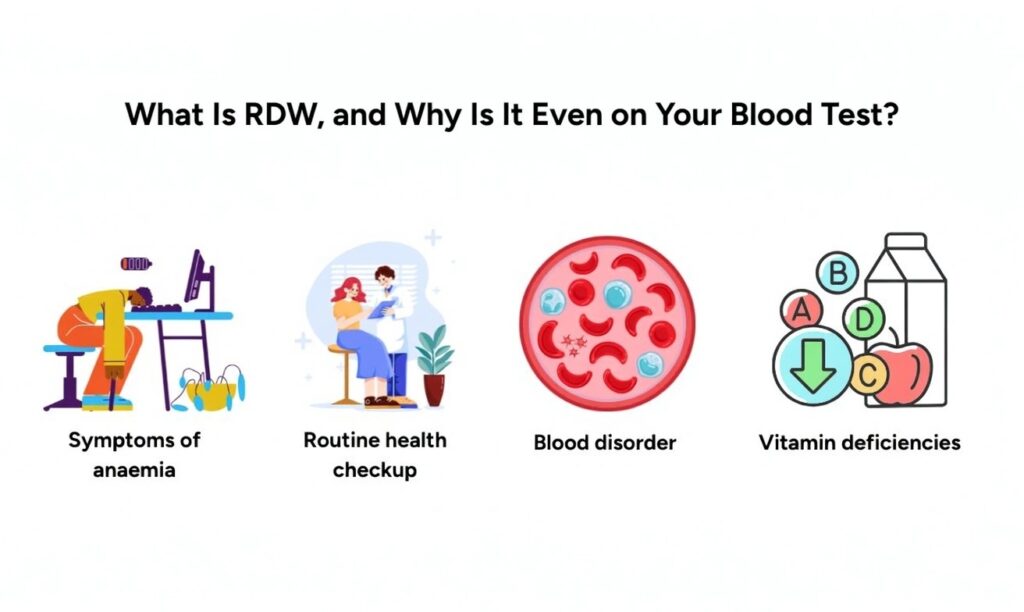
RDW is an abbreviation of Red Cell Distribution Width. That is a complex sounding but we can break it down.
The red blood cells help in the transportation of oxygen in your body. These cells are approximately the same size in a healthy person, as a bunch of cookies baked with the same cookie cutter. RDW is a measurement of the degree of variation in their size. In case you have rather homogenous red blood cells, your RDW will be normal. However, when there is a large difference in their sizes-some cells are bigger than others, some smaller than others-then your RDW will be high.
- RDW test is an inclusion of a Complete Blood Count (CBC) which is a regular test that your doctor may order to have a picture of your general health.
What is it used for?
The big RDW tells you what your red blood cells are not the same size. It is called anisocytosis and is the abnormality in size of the red blood cells. The question is: why?
The list of possible causes is rather long and may include minor and more severe causes. However, high RDW is never the diagnosis as such. It is never tested by itself as it is always assessed with other blood tests particularly MCV (Mean Corpuscular Volume) which checks the size of your red blood cells on average.
How Does the Lab Actually Measure RDW?
Your doctor will not simply examine your RDW. They will compare it to your MCV and the two will be able to provide hints as to the cause of the abnormality. The combinations suggest the following:
How Is RDW Reported?
RDW is reported as a percentage. The normal range is 11.5 to 14.5 normally but it may be a little more or less depending on the lab.
Some labs report two types of RDW
RDW-CV (Coefficient of Variance) the more often reported, is as a percentage. It uses the formula: (RDW-SD ÷ MCV) × 100.
RDW-SD (Standard Deviation) in femtoliters (fL), which is the actual distribution of the red cell sizes. In some clinical scenarios, this is more accurate to some doctors.
What Does “High RDW” Actually Mean in Plain Terms?
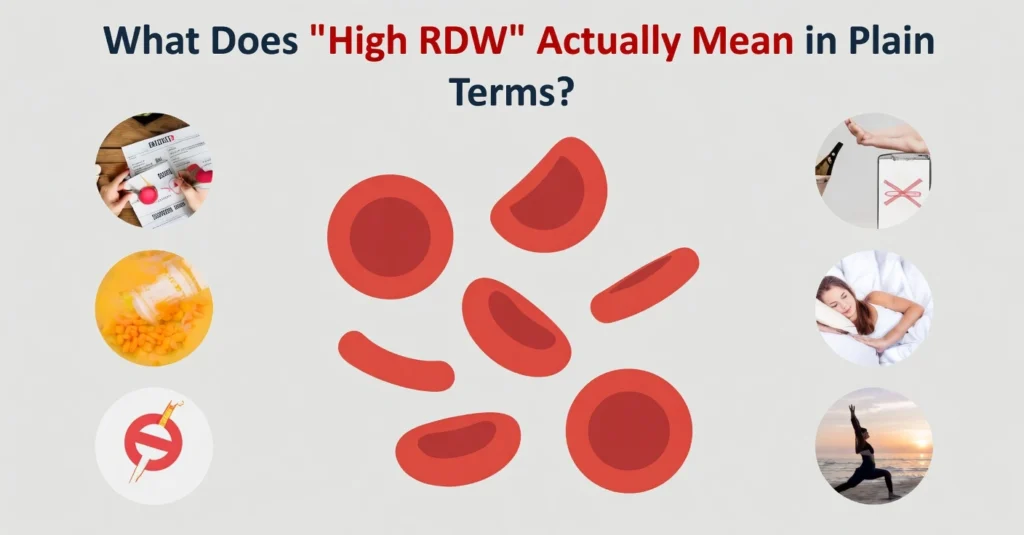
What it is, is that your red blood cells are not even in size. It is medically termed as anisocytosis which literally translates to unequal cells. There are small and large cells, and varieties are greater than your body usually prefers.
But why do you suppose that might be? Well, it can be all kinds of innocuous and all the way up to something that has to be treated.
The RDW + MCV Combination Is the Real Diagnostic Key
- RDW is hardly considered by doctors on its own. They examine it along with MCV to determine the kind of anemia or condition that could be involved. Such a combination works like this:
- High RDW + Low MCV – This is the typical anemia due to iron deficiency. Your red cells are small (low MCV) and unequally sized (high RDW). This is the most prevalent cause of a high RDW outcome in the world.
- High RDW + High MCV – This type of pattern usually indicates a deficiency of vitamin B12 or folate. Your cells are big but not the same size.
- High RDW + Normal MCV – This is a mixed picture that can either suggest early iron deficiency, early B12 deficiency or a combination of deficiencies that also occurs concomitantly.
- Normal RDW + Low MCV – Typically indicates thalassemia (inherited blood disease), but not iron deficiency. This is a key difference that can be actually used by a normal RDW to exclude iron deficiency and refer to inherited disorders.
- Normal RDW + High MCV – Frequently observed in liver disease or hypothyroidism.
- The latter fact is actually very helpful. Frustrating as it is, your high RDW result is in fact providing your doctor with some real diagnostic information than a normal result would not have done.
Understanding the Danger Level Tiers From Mildly Elevated to Critically High
One thing most online articles completely gloss over is the degree of elevation. Not all high RDW results carry the same urgency. Here is a practical framework for understanding the tiers:
Mildly Elevated: 14.6% to 16%
This range is the most common elevation seen in routine blood tests. It’s generally not an emergency, but it does warrant investigation. In most cases, this level points to early or mild nutritional deficiency typically iron, B12, or folate. It can also appear transiently after blood loss or blood donation.
Significantly Elevated: 16% to 18%
At this level, the size variation in your red blood cells is more pronounced, and the likelihood of a significant underlying condition increases. This range is more commonly associated with moderate to severe anemia, chronic disease, liver problems, or thyroid dysfunction.
- If your RDW is in this range, your doctor should be actively investigating the cause rather than simply monitoring it. You’ll want follow-up tests sooner rather than later.
Critically High: Above 18%
An RDW above 18% is unusual and indicates a substantial problem with red blood cell production. This level is associated with severe nutritional deficiencies, bone marrow disorders, complex mixed anemias, or significant systemic illness.
If your RDW is in this range especially if it’s accompanied by symptoms like severe fatigue, shortness of breath at rest, chest pain, or visible pallor you need prompt medical evaluation. This is not a “wait and see” situation.
When to Seek Urgent Medical Attention
Regardless of where your RDW falls on the above scale, certain symptoms alongside an elevated RDW should prompt same day or emergency care. These include chest pain or pressure, difficulty breathing at rest, fainting or near-fainting, a heart rate that feels unusually rapid or irregular, confusion or inability to concentrate, and severe pallor of the skin, gums, or inner eyelids. These symptoms may indicate severe anemia or another serious condition that needs immediate attention.
The Most Common Causes of High RDW
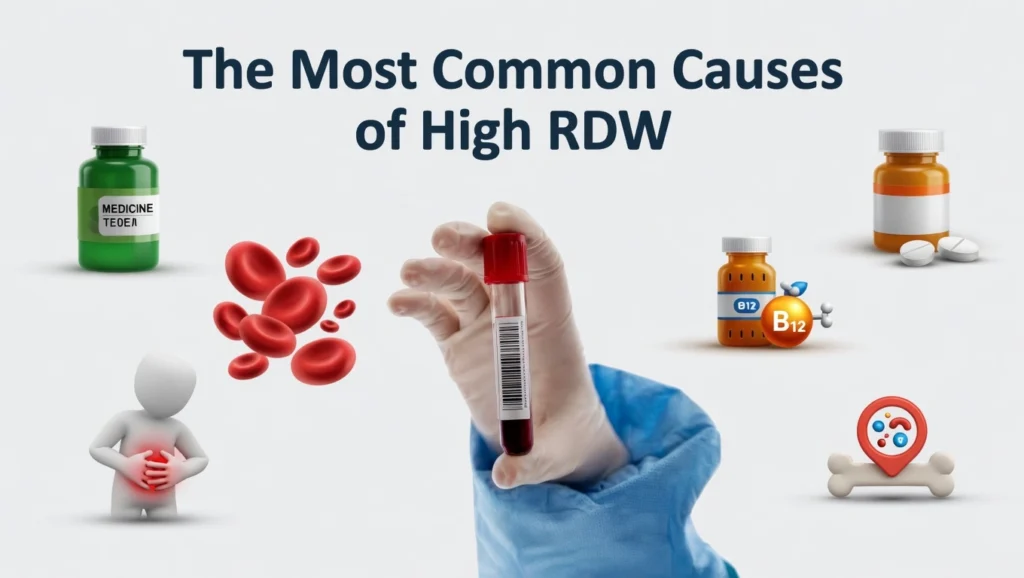
Iron Deficiency — The Number One Culprit
Iron deficiency is the single most common cause of high RDW around the world. When your body doesn’t have enough iron, it can’t produce normal-sized red blood cells. Instead, it starts making smaller, paler cells. But the key word here is starts in early iron deficiency, your body is producing a mix of old normal cells and new small cells. That mix creates the size variation and pushes your RDW up.
- You do not have to have full blown anemia for iron deficiency to affect your RDW. In fact, high RDW can appear before full anemia develops. This makes it a valuable early warning signal catching the problem before it becomes a bigger one.
- Who’s most at risk for iron deficiency Women who menstruate heavily, pregnant women, vegetarians and vegans, people with digestive conditions like celiac disease or Crohn’s disease, and people who have recently had surgery or significant blood loss.
Vitamin B12 Deficiency Bigger Cells, More Variation
Vitamin B12 is essential for making red blood cells. Without enough of it, your body makes oversized, immature red blood cells called megaloblasts. These big, abnormal cells get mixed in with your normal red blood cells, creating size variation that raises your RDW.
- One specific subtype worth knowing about is pernicious anemia a form of B12 deficiency caused not by diet, but by the body’s inability to absorb B12 properly. People with pernicious anemia lack a protein called intrinsic factor, which is produced in the stomach and is essential for B12 absorption.
- No matter how much B12 they eat, their gut can’t absorb it. This type of deficiency requires B12 injections rather than oral supplements, which is why getting the correct diagnosis matters so much.
Folate (Folic Acid) Deficiency The Often-Overlooked Partner
Folate works alongside B12 in red blood cell production, and a deficiency in either one causes similar blood changes. Folate deficiency is particularly concerning in pregnant women, as it significantly increases the risk of neural tube defects in the developing baby which is why folic acid supplements are recommended before and during pregnancy.
Folate deficiency can also occur in people who eat few fruits and vegetables, people with alcohol use disorder, and people with malabsorption conditions.
Because B12 and folate present with such similar patterns in the CBC, doctors typically measure both at the same time to distinguish between them.
Hemolytic Anemia The Missed Cause Most Articles Don’t Mention
Hemolytic anemia occurs when the body destroys red blood cells faster than it can replace them. This destruction can happen inside blood vessels (intravascular hemolysis) or in the spleen and liver (extravascular hemolysis).
Recent Blood Loss or Recovery from Anemia

If you’ve recently had surgery, an injury, a heavy menstrual period, or donated blood, your body enters repair mode. It starts pumping out new red blood cells rapidly to replace what was lost. These new cells, called reticulocytes, are slightly larger than mature red blood cells. That temporary surge of larger new cells, mixed with your existing normal cells, can temporarily raise your RDW.
This is completely normal and usually resolves on its own as your red blood cell population stabilizes.
Liver Disease
Your liver plays a significant role in red blood cell metabolism and breakdown. Liver disease including alcoholic liver disease, hepatitis, and cirrhosis can disrupt this process and lead to abnormally shaped or sized red blood cells, pushing up the RDW. If your doctor sees a high RDW alongside other markers suggesting liver stress, they’ll want to look at your liver function more carefully.
Thyroid Problems
Both hypothyroidism (underactive thyroid) and hyperthyroidism (overactive thyroid) can affect red blood cell production. An underactive thyroid in particular is associated with changes in red blood cell size and can contribute to a high RDW. Thyroid problems are very common especially in women and are easily treated once diagnosed.
Chronic Inflammatory Conditions
Conditions involving chronic inflammation such as rheumatoid arthritis, inflammatory bowel disease, lupus, or chronic kidney disease can affect how the bone marrow produces red blood cells. The result can be an uneven mix of cell sizes and an elevated RDW.
- Interestingly, researchers have discovered that RDW is a useful marker of inflammation more broadly.
- Higher RDW values correlate with higher inflammatory markers like CRP (C-reactive protein), which is why some researchers now study RDW as a general indicator of inflammatory burden in the body.
Certain Medications
Some medications directly interfere with red blood cell production or nutrient absorption. Metformin (for diabetes) reduces B12 absorption over time. Methotrexate (used for rheumatoid arthritis and some cancers) interferes with folate metabolism.
Genetic Red Blood Cell Disorders
Conditions like thalassemia and sickle cell disease involve structurally abnormal red blood cells. In thalassemia, the bone marrow produces a mix of normal and abnormal hemoglobin, leading to varying cell sizes and elevated RDW.
In sickle cell disease and related hemoglobin disorders (like hemoglobin C disease), red blood cell fragmentation further increases size variation.
If you have a family history of these conditions or come from a population where they are more common (Mediterranean, Middle Eastern, African, or South Asian heritage), your doctor may order additional tests like hemoglobin electrophoresis.
RDW and Anemia: Understanding the Connection
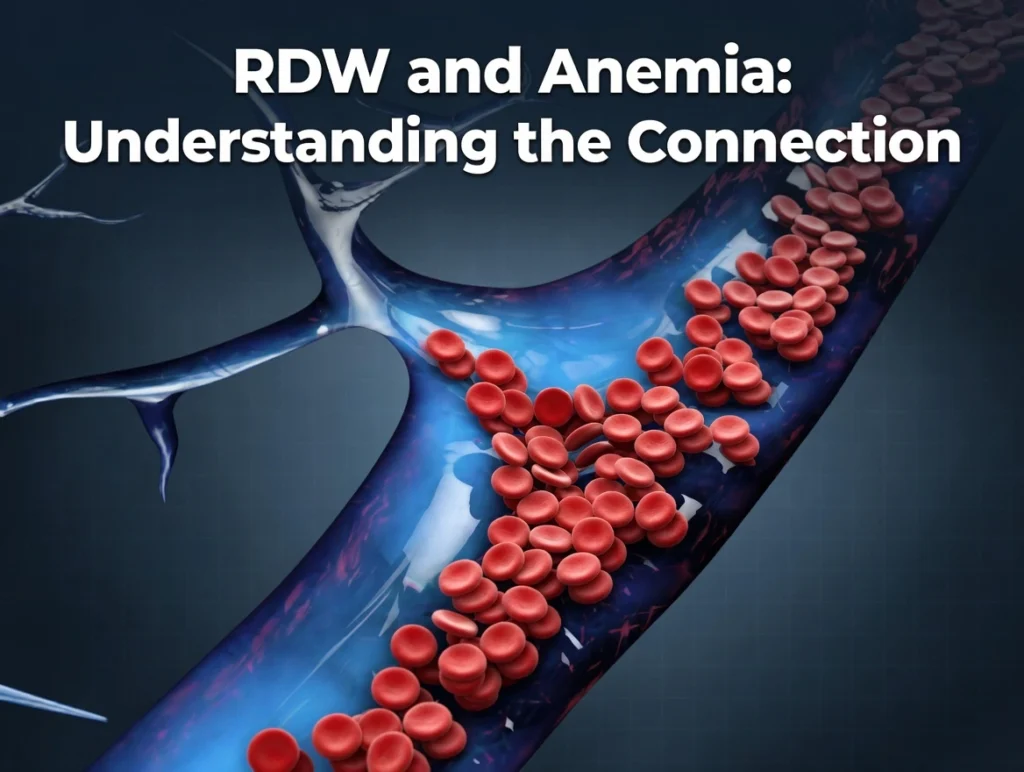
Anemia is the condition where your blood doesn’t carry enough oxygen either because you don’t have enough red blood cells, or because the cells you do have are abnormal or undersized.
Symptoms of Anemia to Watch For
If your high RDW is connected to anemia, you might notice some of these symptoms or you might have none at all, especially if the anemia is mild:
- Persistent fatigue that doesn’t improve with rest. Shortness of breath during activities that used to feel easy. Pale skin, pale gums, or pale inner eyelids. Cold hands and feet. Headaches, dizziness, or lightheadedness. A rapid or irregular heartbeat. Difficulty concentrating or persistent “brain fog.”
- The problem is that these symptoms are vague enough that many people chalk them up to stress, aging, or just being busy. That’s exactly why blood tests like the CBC and markers like RDW are so valuable. They can catch a problem that’s quietly brewing before it gets bad enough to be obvious.
Iron Deficiency Anemia
Iron deficiency anemia is the most common cause of high RDW and typically develops in stages. First, iron stores are depleted. Then, iron levels in the blood fall. Then, red blood cell production is affected. RDW rises in the early stages of this process, making it one of the first lab abnormalities to appear.
Treatment typically involves oral iron supplements, though some people with severe deficiency or absorption problems may need intravenous iron.
Megaloblastic Anemia
When B12 or folate is deficient, the result is megaloblastic anemia anemia caused by oversized, poorly functioning red blood cells. These cells are large but fragile and don’t carry oxygen efficiently. Treatment involves supplementing the deficient nutrient, either orally or, in cases of pernicious anemia or severe deficiency with absorption problems, through injections.
When High RDW Points to Something More Serious
Most of the time, a high RDW will turn out to have an explanation that’s manageable and treatable. But it’s important to be honest: in some cases, high RDW is associated with more serious conditions.
Myelodysplastic Syndrome (MDS)
MDS is a group of disorders where the bone marrow doesn’t produce enough healthy blood cells. It’s more common in older adults and can sometimes progress to leukemia. High RDW is one of the hallmarks of MDS, because the bone marrow is producing a chaotic mix of abnormal and normal cells.
If your doctor suspects MDS particularly if you’re older and have abnormalities in multiple blood cell lines, not just red blood cells they may refer you to a hematologist for further evaluation including a bone marrow biopsy.
Cardiovascular Disease and Heart Failure
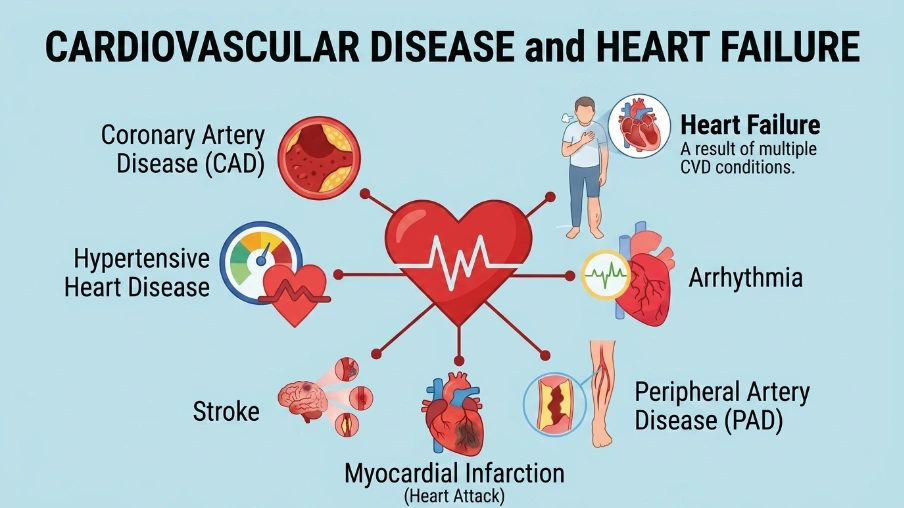
A growing body of research has shown that high RDW is independently associated with worse outcomes in people with heart failure, coronary artery disease, and after heart attacks. It’s not that RDW causes these problems it’s that the same inflammatory processes and nutritional deficiencies that drive heart disease also drive up RDW.
Some cardiologists now include RDW as one of several risk markers when assessing patients with heart disease, because higher RDW predicts higher risk of complications.
Kidney Disease
The kidneys produce a hormone called erythropoietin, which signals the bone marrow to make red blood cells. When the kidneys are damaged, this signaling is disrupted, leading to anemia and abnormal red blood cell production. High RDW is commonly seen in people with chronic kidney disease.
Cancer
Certain cancers particularly those affecting the blood and bone marrow like leukemia, lymphoma, and multiple myeloma can cause abnormal red blood cell production and elevated RDW. Research also shows a link between high RDW levels and several solid tumor cancers including lung, breast, and colon carcinomas, as well as brain tumors and sarcomas.
- It’s important to note: a high RDW does not mean you have cancer. It is a non-specific marker with many possible causes. But when combined with other abnormal findings, it may prompt your doctor to investigate further.
Autoimmune Conditions
Conditions like lupus, rheumatoid arthritis, and Hashimoto’s thyroiditis can all affect red blood cell production and lead to elevated RDW. These conditions involve chronic inflammation and sometimes direct antibody-mediated attack on red blood cells.
What Your Doctor Will Do Next The Follow-Up Process Explained
Getting a high RDW result doesn’t mean you walk out of the doctor’s office with a diagnosis. It means your doctor now has a reason to look more closely. Here’s what the follow-up process typically looks like.
Ordering Additional Blood Tests
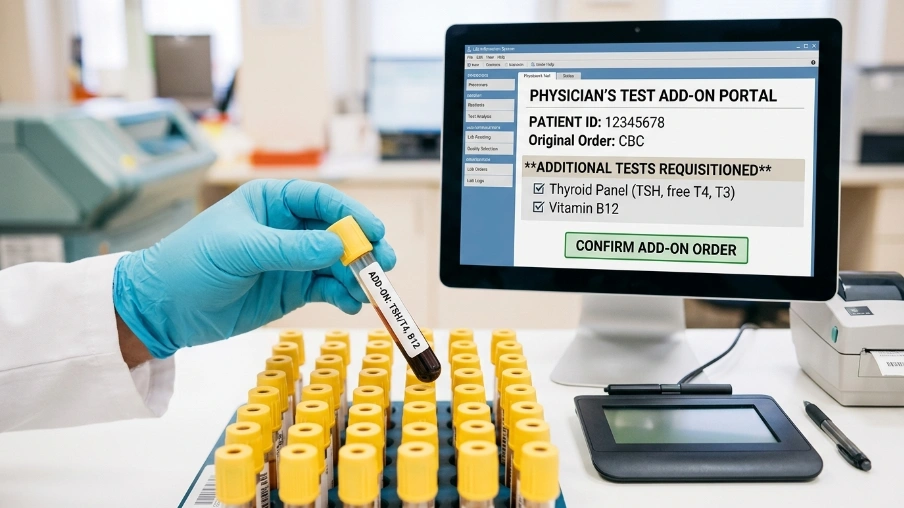
Depending on the pattern of your CBC results, your doctor is likely to order some or all of the following:
Serum ferritin and iron studies — to check for iron deficiency. Ferritin is the storage form of iron and is the most sensitive early marker of iron deficiency. Iron studies also include TIBC (Total Iron Binding Capacity), which rises when iron stores are low.
Vitamin B12 level — to check for B12 deficiency, including pernicious anemia.
Folate level — always measured alongside B12, since both deficiencies present with similar blood patterns and must be distinguished from each other.
Reticulocyte count — to assess how actively your bone marrow is making new red blood cells. This test helps distinguish chronic disease states from hemolytic anemia and acute blood loss.
Peripheral blood smear — a lab technician looks at your actual red blood cells under a microscope to describe their shape, color, and any abnormalities. This is one of the most informative tests available and can spot fragmented cells (suggesting hemolysis), target cells (suggesting thalassemia), or hypersegmented neutrophils (suggesting B12 deficiency).
Thyroid function tests (TSH, T4) — if thyroid disease is suspected.
Liver function tests — if liver disease is suspected.
Inflammatory markers (CRP, ESR) — if an inflammatory condition is suspected.
Direct antiglobulin (Coombs) test — if hemolytic anemia is suspected.
Specialist Referral
If the cause isn’t clear from standard blood tests, or if something concerning turns up, your doctor may refer you to a hematologist (blood specialist). A hematologist has the tools and expertise to investigate more complex blood disorders, including performing a bone marrow biopsy if necessary.
Can Your Diet Affect Your RDW? The Nutritional Connection
Since iron deficiency and B12/folate deficiency are the most common causes of high RDW, addressing nutritional gaps can make a real difference. Here’s what to know.
Iron Rich Foods Worth Adding to Your Diet
There are two types of dietary iron: heme iron (from animal sources, absorbed more efficiently) and non-heme iron (from plant sources, absorbed less efficiently but still valuable).
- One practical tip: eating vitamin C-rich foods alongside iron-rich foods significantly boosts iron absorption. A squeeze of lemon juice on your spinach salad, or orange juice with your iron-fortified cereal, can meaningfully improve how much iron your body actually absorbs.
- On the flip side, certain things inhibit iron absorption: calcium (found in dairy), tannins (found in tea and coffee), and phytates (found in whole grains and legumes). This doesn’t mean you should avoid these foods just try not to consume them at the exact same time as your main iron sources.
Vitamin B12 Sources
B12 is found almost exclusively in animal products. The richest sources include beef liver, clams, salmon, tuna, beef, eggs, and dairy. If you’re vegetarian or vegan, B12 supplementation is essentially non-negotiable. You cannot reliably get sufficient B12 from plant foods alone unless you’re consistently eating B12-fortified foods.
Folate-Rich Foods
Folate is found in leafy green vegetables (spinach, kale, romaine lettuce), legumes (beans, lentils, chickpeas), asparagus, broccoli, avocado, and fortified grains. Cooking destroys folate, so eating raw or lightly cooked vegetables preserves more of this nutrient.
Should You Just Start Taking Supplements?
Resist that urge until you’ve talked to your doctor. Taking iron supplements without confirmed iron deficiency can be harmful iron overload is a real condition with serious consequences.
Sleep, Smoking, and Alcohol The Lifestyle Factors That Directly Raise Your RDW

This section covers information that none of the major competitor articles address in any meaningful depth and it may be directly relevant to your situation.
Poor Sleep and RDW
This is perhaps the most surprising entry on this list. Research published in 2026 involving more than 20,000 adults found that lower sleep quality and more frequent sleep disorders were independently associated with higher RDW levels. This connection held even after adjusting for other health factors.
- Why would poor sleep affect red blood cell size variation The likely explanation is inflammation. Poor sleep is well-established as a driver of systemic inflammation it raises levels of pro-inflammatory cytokines that can interfere with normal bone marrow function and red blood cell production.
- Disrupted sleep also increases oxidative stress, which can accelerate red blood cell breakdown and create the size variation that shows up as elevated RDW.
Smoking and RDW: A Direct Relationship
Multiple studies have documented a clear relationship between cigarette smoking and elevated RDW. Smoking damages red blood cells through direct oxidative stress, alters how the bone marrow produces cells, and promotes chronic systemic inflammation all mechanisms that increase red blood cell size variation.
The effect is dose-dependent: heavier smokers tend to have higher RDW than lighter smokers, and former smokers tend to have lower RDW than current smokers.
Alcohol and RDW
It’s well-known that heavy alcohol use depletes folate and causes macrocytic anemia. But alcohol’s effect on RDW goes beyond just interfering with folate absorption. Alcohol has a direct toxic effect on red blood cell membranes, alters the viscosity and fluidity of cell walls, and damages the bone marrow’s ability to produce normal cells consistently.
- Regular, heavy drinking is one of the more reliably identifiable causes of elevated RDW and one where the fix is straightforward in principle, even if it’s challenging in practice.
- If you’re drinking heavily and your RDW is high, reducing alcohol consumption is a meaningful and actionable step your doctor will likely recommend.
Conclusion
If you’ve been anxious about your RDW result, hopefully this article has helped replace some of that anxiety with understanding. A high RDW means your red blood cells are more varied in size than usual and your body is probably trying to tell you something through that variation.
The most common reasons are nutritional (iron, B12, or folate deficiency), and those are very fixable. Even when high RDW points to something more systemic a thyroid issue, a liver condition, a chronic inflammatory disease catching it now gives you a real advantage.

